
Leave Your Message
-
Contact Phone
-
 Contact Email
So, it looks like the Disposable Nitrile Gloves industry is on the verge of some pretty big changes before 2026 rolls around. I came across a recent report from Global Market Insights, and it hints that by 2025, the market could hit around $5 billion. That’s mainly because more people are using these gloves in healthcare, food service, and industrial work – you know, places where hygiene really matters. Honestly, with everyone being more conscious about staying clean, that’s really pushing things forward.
Dr. Emily Chen, who’s pretty much an expert in this area, mentioned, “The surge in interest for Disposable Nitrile Gloves is not only changing safety practices but also how manufacturers are making them.” It’s interesting to see how consumer needs are pushing companies to make gloves that are tougher, more comfortable, and free from allergens. But, of course, it’s not all smooth sailing. Many businesses are struggling to keep up with sustainable practices, especially since costs of production are going up and raw materials are getting harder to get.
From chatting with industry folks, it’s clear there’s still a lot of room for improvement. A big one? Eco-friendly materials and greener manufacturing processes could really help companies stand out in a crowded market. Keeping an eye on new trends and cutting-edge tech will be key because, with the demand for Gloves Nitrile Disposable continuing to grow, this industry is shaping up to be pretty exciting for the future.

The OEM disposable nitrile gloves market is evolving rapidly. A recent report forecasts a potential growth rate of over 8% annually. This growth reflects rising demand in healthcare and food safety sectors. Increased awareness of hygiene has driven this trend. Furthermore, the global pandemic has changed purchasing behaviors significantly.
Market dynamics are shifting toward sustainability. Manufacturers are exploring eco-friendly materials for Gloves Disposable Nitrile. Innovations in production processes could reduce environmental impact. For instance, some firms are adopting more efficient production methods. This reflects a growing consumer demand for responsible sourcing.
Challenges persist in the market. Supply chain disruptions have been frequent. Also, raw material costs have fluctuated unpredictably. Companies must adapt to these realities. Building robust supply chains will be crucial for success in 2026. A strategic response to these challenges will indicate market resilience moving forward.
The global demand for Nitrile Disposable Gloves is on the rise. This growth is driven by several factors, especially in the healthcare and food industries. As awareness of hygiene increases, the need for reliable protective gear becomes essential. Many industries are adopting nitrile gloves due to their high resistance to chemicals and punctures. This contributes to their popularity among professionals who require both safety and comfort.
Tips: Always choose gloves that meet your specific requirements. Consider factors like thickness and texture for optimal performance. Conduct thorough research to recognize reputable suppliers who provide high-quality Nitrile Disposable Gloves.
Economic factors also influence demand. The ongoing challenges in the supply chain can lead to fluctuations in availability. Therefore, organizations must prepare for potential shortages. It’s crucial to develop contingency plans to ensure a steady supply of Nitrile Disposable Gloves. Many businesses find it beneficial to maintain stock levels that account for unexpected demand spikes.
Tips: Regularly evaluate your glove inventory. Monitor usage trends to avoid overruns or shortages. Collaborating with suppliers can create better forecasting strategies.
In the rapidly evolving landscape of the
disposable nitrile gloves industry, technological advancements are pivotal. New manufacturing
techniques streamline production, enhancing efficiency.
Automation in the production line reduces human error and increases output.
Smart technology applications,
like real-time monitoring, ensure quality control throughout the manufacturing process. This not
only improves product reliability but also helps manage costs effectively.
Tips for manufacturers: Embrace innovation. Investing in modern machinery can pay off
in the long run. Experiment with smart integrations to maximize productivity. Additionally,
consider sustainable practices.
Eco-friendly materials are becoming increasingly important as regulations tighten.
The trend towards customization is also notable. Manufacturers are developing gloves tailored to
specific industries. This level of personalization demands advanced materials and processes.
However, it raises challenges in terms of consistency and mass production. Misaligned expectations
can lead to disappointments. Therefore, continuous
feedback loops with clients are essential for improvement and alignment. Staying adaptable
in this evolving landscape is crucial for success.
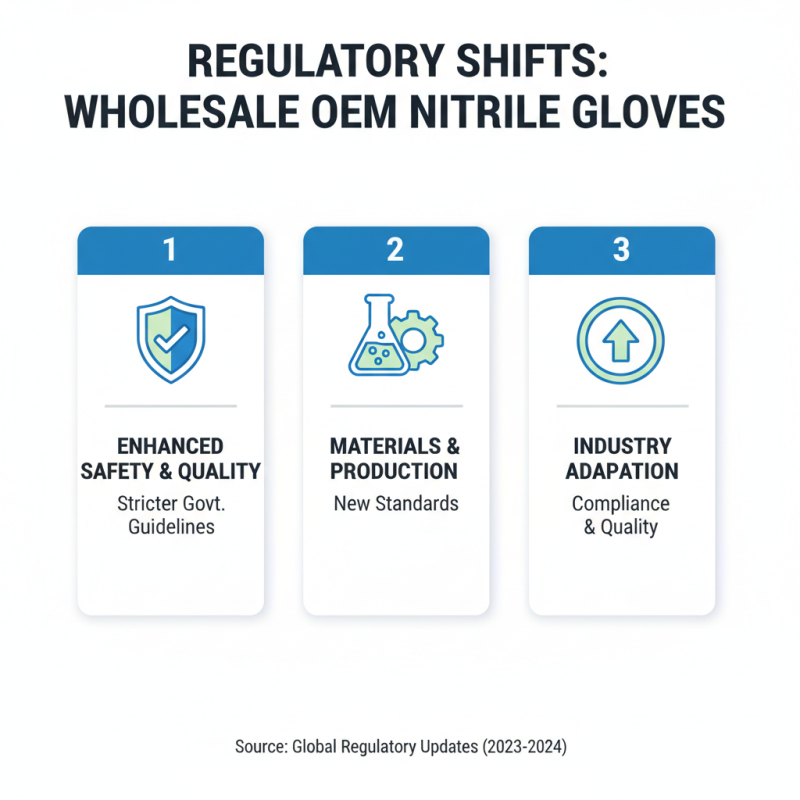
Regulatory changes significantly impact the wholesale OEM nitrile glove sector. In recent years, governments worldwide have introduced stricter guidelines aimed at enhancing safety and quality. These regulations often focus on the materials used and production methods. Companies must adapt quickly to keep up, ensuring compliance without sacrificing quality.
Maintaining compliance can be challenging. Many OEM manufacturers face difficulties in sourcing materials that meet new standards. As a result, some may cut corners, risking product quality. This can lead to potential liabilities and damage to reputation. Investing in proper training and quality assurance processes can mitigate these risks.
Tips: Always stay updated on regulatory changes. Join industry groups to exchange knowledge and best practices. Foster relationships with reliable suppliers to ensure you have access to compliant materials. Be proactive rather than reactive when adapting to new guidelines in the Disposable Nitrile Gloves market. Make continuous improvement a core part of your business strategy to remain competitive.
Sustainability is increasingly influencing the disposable nitrile gloves market. Recent studies show that around 75% of consumers prefer eco-friendly options. This shift is reshaping product development and manufacturing processes. Companies are exploring biodegradable materials and sustainable sourcing practices to meet this demand.
The growing importance of sustainability is highlighted by a report from ResearchAndMarkets, indicating that the global nitrile gloves market is expected to reach $11.26 billion by 2026, growing at a CAGR of 8.74%. However, achieving sustainability poses challenges. Many manufacturers struggle with balancing cost and environmental impact. Innovations are needed to reduce waste in production and improve the recyclability of gloves.
Certifications and eco-labels are gaining traction. These endorsements significantly influence purchasing decisions. Yet, awareness remains low among end-users, indicating a gap in education. Industry stakeholders must work together to promote sustainable practices while providing clear information. This will help drive positive changes, benefiting both the environment and consumer health.
The wholesale OEM disposable nitrile gloves industry is seeing rapid evolution. Major players are adapting to changing market demands. This shift includes an emphasis on sustainability and material innovation. Companies are investing in eco-friendly production processes. However, balancing cost and quality remains a challenge in this competitive landscape.
Market leaders are constantly reassessing their strategies. They must respond to supply chain disruptions and fluctuating raw material prices. Collaboration with suppliers is becoming increasingly important. Agile manufacturing processes may prove essential. Despite these efforts, some players struggle to remain competitive. A lack of adaptability can lead to missed opportunities in a growing market.
Emerging technologies play a pivotal role in the industry's future. Automation and predictive analytics are enhancing efficiency. Yet, integrating these technologies comes with its own set of challenges. Companies must ensure staff are adequately trained. Continuous improvement and innovation are non-negotiable for maintaining a competitive edge. Navigating these complex dynamics requires keen insight and a commitment to excellence.
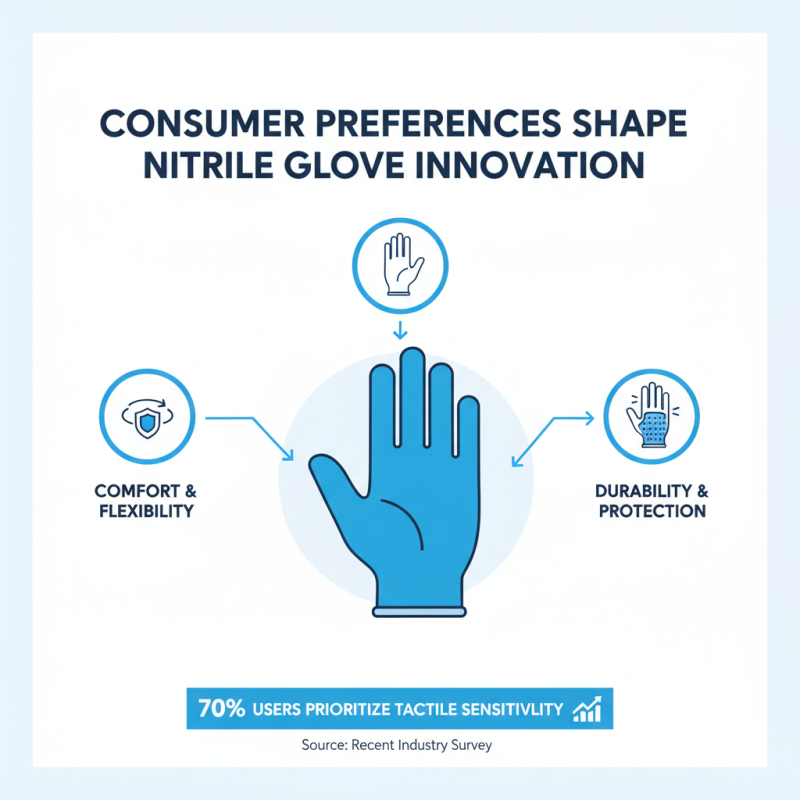
The demand for disposable nitrile gloves is evolving. Consumers increasingly prioritize comfort, fit, and protection. Recent reports suggest a significant shift toward gloves that are both flexible and durable. A survey indicated that 70% of users prefer gloves that enhance tactile sensitivity. This highlights the need for manufacturers to focus on these features during design.
Nitrile gloves must also cater to specific applications. For instance, healthcare professionals require gloves that ensure maximum barrier protection. Meanwhile, food industry users value gloves that resist punctures and tears. The rising popularity of Non Disposable Nitrile Gloves also indicates a demand for reusable, eco-friendly options. Consumers are being more mindful, seeking products that align with sustainability goals.
Tips: Consider tests for grip strength when selecting gloves. This improves safety during use. Another suggestion is to assess the thickness of the glove. A thicker glove may provide better durability, but it can compromise dexterity. Balancing these features is essential for optimal performance.
In the electronics industry, the significance of maintaining clean work environments and controlling electrostatic discharge (ESD) cannot be overstated. Data from the IPC (Institute of Printed Circuits) indicates that ESD can lead to failures in electronic components at an alarming rate, with billions of dollars lost each year due to non-compliance with antistatic protocols. This reality underscores the need for proper protective gear, particularly disposable nitrile gloves that are specifically designed for the meticulous tasks required in electronics assembly.
Nitrile gloves sourced from reputable manufacturers offer a unique combination of antistatic properties, low particle shedding, and high tactile sensitivity. These gloves are engineered to minimize the risks associated with static electricity, which can damage sensitive electronic components and disrupt production lines. In fact, studies have shown that gloves with low friction coefficients can significantly enhance grip, allowing workers to handle tiny components without risking damage or contamination. Thus, the application of disposable nitrile gloves in production environments is not merely a matter of safety but also a crucial factor in maintaining operational excellence.
Furthermore, the tactile sensitivity offered by high-quality nitrile gloves allows technicians to feel the intricate details of small electronic parts, ensuring precision in their work. Independent industry reports suggest that using the right protective equipment, including specifically designed nitrile gloves, enhances workflow efficiency and reduces the likelihood of operational errors. As a primary element in ESD-control strategies, these gloves not only protect the wearer's hands but also play a pivotal role in upholding the integrity of electronic manufacturing processes.
: New techniques enhance production efficiency. Automation reduces human error, boosting output significantly.
Smart technology enables real-time monitoring. This improves quality control throughout the manufacturing process.
Using eco-friendly materials is crucial. Innovations must target waste reduction and recyclability improvement.
Customization addresses specific industry needs. However, it may create consistency challenges in mass production.
Consumers prioritize comfort, fit, and protection. Flexible and durable gloves are increasingly popular.
Healthcare pros need maximum barrier protection. Food industry users look for gloves that resist punctures and tears.
Many users prefer thicker gloves for durability. However, this can reduce dexterity and comfort.
Certifications influence purchasing decisions but awareness among consumers remains low. Education is needed to bridge this gap.
Balancing cost with environmental impact is tough. Innovations are necessary to overcome production waste issues.
Continuous feedback loops with clients are crucial for aligning expectations and enhancing product quality.
The wholesale OEM disposable nitrile gloves industry is poised for significant changes in 2026, driven by emerging market dynamics and projected global demand growth. Key factors contributing to this growth include advancements in manufacturing technologies and evolving consumer preferences, which emphasize the need for enhanced design and functionality in disposable nitrile gloves.
Moreover, regulatory changes are likely to shape the sector, influencing production standards and compliance measures. Sustainability trends are also becoming increasingly important, driving manufacturers to adopt eco-friendly practices. The competitive landscape will evolve as major players adapt to these trends, striving to meet consumer demands while addressing environmental concerns. Overall, the future of disposable nitrile gloves will hinge on innovations and a keen understanding of market needs.