
Leave Your Message
-
Contact Phone
-
 Contact Email
In today's ever-changing world of workplace safety, picking the right Protective Glove really matters—both for comfort and protection. I read what Sarah Johnson, a safety gear expert at SafeHands Corp, had to say—she mentioned, "The right gloves are so important for reducing risks in dangerous environments." Her words really highlight how important it is to choose gloves that actually fit what you need.
When workers wear good protective gloves, they tend to have better dexterity and avoid hand fatigue. Plus, the gloves should fit well and be resistant to cuts, chemicals, and abrasions. But honestly, a lot of companies forget about comfort. Ill-fitting gloves can slow workers down or even cause injuries. Finding that sweet spot between safety and comfort is key—so both safety and productivity don't suffer.
Also, it’s good to remember that not all protective gloves are the same quality. The brand’s reputation really matters when it comes to how well they work. If you don’t do your homework, you might end up with gloves that don’t do the job, which is pretty dangerous. As the industry keeps evolving, so do the standards for these gloves. Manufacturers are constantly working to improve how they design and make them while keeping prices fair. So, staying informed is a must for anyone responsible for buying safety gear.

Understanding OEM wholesale protective gloves is crucial for safety and comfort in various industries. These gloves provide essential protection while ensuring user comfort during long hours of work. A recent market report highlights that the global protective gloves market is expected to reach over $14 billion by 2027, driven by heightened safety regulations and increased awareness about workplace hazards.
Many industries utilize OEM gloves, such as healthcare and food services, where hygiene is paramount. Among the available materials, Pvc Gloves are favored for their balance of durability and cost-effectiveness. They offer sufficient resistance to chemicals while remaining comfortable for the user. Still, they may not be as robust as rubber or latex in high-risk scenarios. This raises questions about the right choice for specific applications.
Tip: Always assess the specific needs of your workplace to select appropriate gloves. For lighter tasks, PVC gloves might suffice. For more hazardous jobs, consider alternatives. Remember, not every glove fits every task perfectly. Be mindful of your choice and its implications on safety and productivity.
When choosing protective gloves, safety and comfort are paramount. One key feature to consider is material. Different materials provide varying levels of protection and flexibility. For instance, nitrile is durable and chemical-resistant. However, it may lack the flexibility of latex. Additionally, gloves should fit snugly yet comfortably. Loose gloves can hinder dexterity, while tight ones can cause discomfort during prolonged use.
Another essential aspect is grip. A textured surface enhances grip, particularly in slippery conditions. This prevents accidents and increases overall safety. Moreover, consider breathability. Gloves that allow air circulation reduce moisture buildup. This is crucial in hot environments or during extended wear. On the contrary, some types may not provide enough ventilation, leading to discomfort.
A reflective feature is often overlooked. Reflective elements enhance visibility in low-light situations. This is particularly important for outdoor applications. Selecting gloves with adequate cuff length is also vital. Longer cuffs provide added wrist protection but may restrict movement. Balancing these aspects can be challenging. Ultimately, the choice of protective gloves should tailor to specific tasks. For instance, "Exam Glove" types excel in providing barrier protection but may not match heavy-duty needs. Reflecting on these features can lead to better safety outcomes.
When it comes to the manufacturing of high-quality protective gloves, the choice of materials is critical. Natural rubber offers excellent elasticity and comfort, making it a popular option. This material conforms well to the hand and provides a snug fit. However, it may not be suitable for individuals with latex allergies.
Nitrile is another favored material in glove production. It is oil- and chemical-resistant, which enhances safety in various environments. Nitrile gloves also offer a good tactile sensitivity. But, they tend to be slightly less stretchy than latex or rubber. Many manufacturers are exploring synthetic blends to combine the benefits of various materials. The result is gloves that claim to enhance comfort while maintaining safety standards.
Polyethylene gloves are lightweight and cost-effective. They are easy to don and doff, but might lack durability in rigorous settings. Some may question their protective capabilities, especially in heavy-duty tasks. With evolving technology, new materials are introduced regularly. Finding the right balance of safety, comfort, and cost is an ongoing journey for manufacturers and users alike.
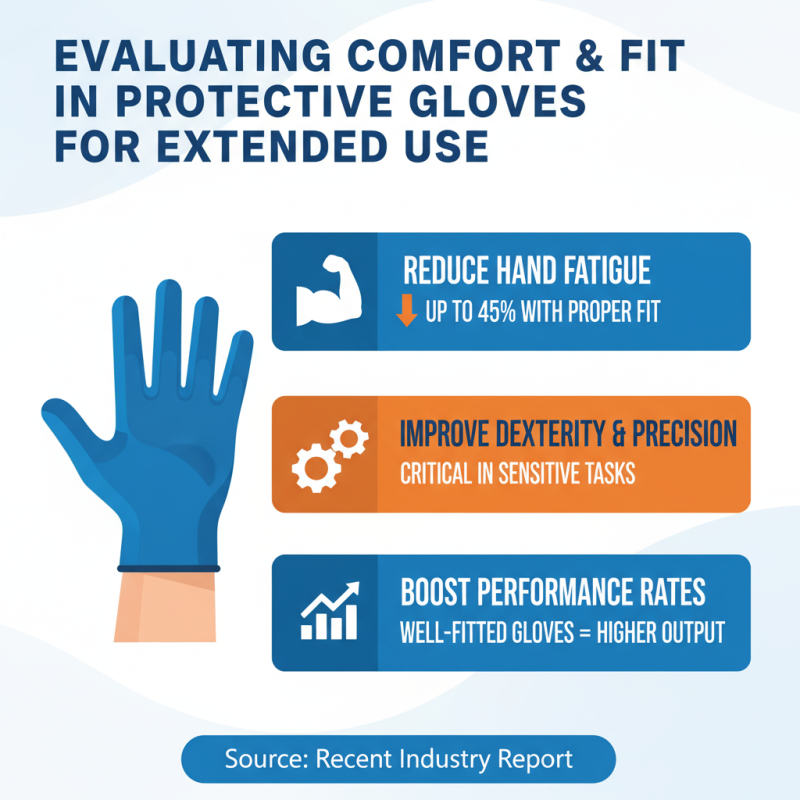
Choosing protective gloves for extended use requires careful consideration of comfort and fit. Studies indicate that proper fit can reduce hand fatigue by up to 45%. Ill-fitting gloves can cause discomfort and hinder dexterity. This is critical in environments where precision is key. A recent report emphasized that workers wearing well-fitted gloves exhibit higher performance rates.
Factors influencing comfort include material breathability and glove design. Gloves made from moisture-wicking fabrics are essential. They help regulate temperature and enhance grip. Research shows that 70% of users prefer gloves with soft liners for daily use. This added comfort can significantly impact productivity. It’s vital to seek gloves that allow for good movement while maintaining protection. Many users overlook the importance of trying different styles and sizes, risking their safety.
Adjustability features also play a significant role. Elastic cuffs or adjustable straps can improve fit. They help prevent gloves from slipping during tasks, enhancing safety. While many options exist, workers often settle for generic solutions. This can lead to long-term issues with comfort and efficiency. Taking the time to find the right gloves is an investment in both safety and performance.
In the realm of protective gloves, selecting the right OEM wholesale options is crucial. Many brands stand out for their commitment to safety and comfort. These brands focus on using high-quality materials that enhance durability. A popular choice among professionals is the Vinyl Glove. It offers excellent protection without compromising on flexibility.
When evaluating different suppliers, consider their production standards. Reliable manufacturers prioritize quality control. They understand the importance of consistent performance in various industries, from healthcare to construction. Some suppliers showcase certifications that underline their reliability and expertise. Investigating these details can lead to better purchasing decisions.
However, not all protective gloves perform equally. Some users find certain gloves uncomfortable during extended use. This can lead to decreased productivity. It's vital to seek feedback from professionals who regularly use these products. Understanding the experiences of others can guide you toward the best options in the market.
When selecting protective gloves, regulatory standards are crucial. These standards ensure the gloves meet safety and comfort requirements for various applications. For instance, the American National Standards Institute (ANSI) and the International Organization for Standardization (ISO) set benchmarks for performance. Gloves rated under these standards provide data on cut resistance, puncture resistance, and other critical factors.
It's interesting to note that according to a report by the Occupational Safety and Health Administration (OSHA), approximately 70% of workplace injuries can be prevented with proper PPE, including gloves. Yet, many businesses fail to comply with safety regulations. In an industry where 40% of hand injuries result from inadequate hand protection, it's vital to address this gap.
Certification labels, such as EN388 and ASTM, indicate that gloves have undergone rigorous testing. This gives users confidence in their effectiveness. However, sometimes manufacturers can misinterpret certification results, leading to complacency among users. The complexities of these standards can create confusion, underscoring the need for ongoing education about proper glove selection.
Choosing the right protective gloves is crucial for safety and comfort. Factors like material, fit, and intended use can significantly impact your experience. Nitrile Gloves are popular for their durability and resistance to chemicals. Consider your work environment when selecting gloves. For light tasks, thinner gloves may suffice. But for heavy-duty jobs, thicker options provide better protection.
Fit is another essential aspect. Gloves that are too loose can lead to reduced dexterity. On the other hand, tight gloves can cause discomfort. Test several sizes to find the best option for your hands. Pay attention to the glove’s grip as well. A textured surface can enhance handling, especially with wet or oily items.
Reflect on your specific needs. Are you dealing with hazardous materials? Or is your work mostly light maintenance? Evaluate your priorities. Sometimes, a lower-cost glove may meet your needs, while in other cases, investing in high-quality nitrile gloves is essential. Proper selection not only promotes safety but also contributes to overall comfort during use.
: Natural rubber, nitrile, polyethelyne, and synthetic blends are popular options. Each offers unique benefits for users.
It provides excellent elasticity and comfort. It conforms to the hand well, ensuring a snug fit.
Yes, they may cause allergic reactions in individuals with latex allergies. Alternatives might be needed for those users.
Nitrile gloves are oil- and chemical-resistant. They also offer good tactile sensitivity and safety in diverse environments.
They are lightweight and cost-effective. However, they may lack durability in heavy-duty applications or rigorous settings.
Certifications ensure gloves meet safety and performance standards. They indicate rigorous testing for quality and reliability.
Some gloves can be uncomfortable during extended use. This discomfort may lead to decreased productivity and safety risks.
Seek feedback from professionals and consider material properties. Understanding others’ experiences helps in making informed choices.
They set benchmarks for safety and comfort. Compliance ensures gloves protect users effectively in various applications.
Misinterpretation of certification results can lead to user complacency. Continuous learning can help in proper glove selection.
In the realm of safety and comfort, understanding OEM wholesale protective gloves is essential for various industries. This article outlines the key features to consider, such as durability, grip, and resistance to chemicals. It also highlights the top materials used in manufacturing high-quality protective gloves, ensuring reliability and protection for users. Evaluating comfort and fit is crucial, especially for extended use, as poorly fitting gloves can reduce safety and increase fatigue.
Moreover, the discussion includes the importance of regulatory standards and certifications, which guarantee that protective gloves meet necessary safety requirements. For those looking to select the right protective gloves, practical tips are provided, guiding users to assess their specific needs effectively. By understanding these aspects, consumers can make informed decisions, ultimately enhancing workplace safety and comfort through the right choice of protective gloves.