

Leave Your Message
-
Contact Phone
-
 Contact Email
You know, in the ever-changing world of personal protective equipment, the demand for synthetic gloves just keeps climbing. I mean, according to a report from Grand View Research, the global market for these gloves is projected to hit around $22.7 billion by 2025. Pretty crazy, right? Most of this growth comes from the growing awareness around health and safety, especially in industries like healthcare and food processing.
But here’s the thing—finding the right source for these gloves isn't always straightforward. The market’s flooded with options, and it can be pretty overwhelming trying to pick a reliable supplier. Things like quality, price, and delivery times really matter here. Sometimes folks forget how important certifications and safety standards are—skipping over those checks can lead to some pretty costly mistakes down the line. That’s why it’s so important to do your homework and really vet your potential suppliers. Getting advice from industry veterans can make a huge difference—they know the ins and outs and can help you find the best fit for what you're after.
All in all, navigating this market takes a bit of planning and some solid knowledge. Understanding exactly what you need and what qualities to look for in synthetic gloves will really point you in the right direction. Taking a step-by-step approach, and reflecting on what you’ve learned from past experiences, can seriously boost your sourcing game. Plus, it’ll help keep your team safe and your supply chain running smoothly. Trust me, a little extra prep goes a long way!

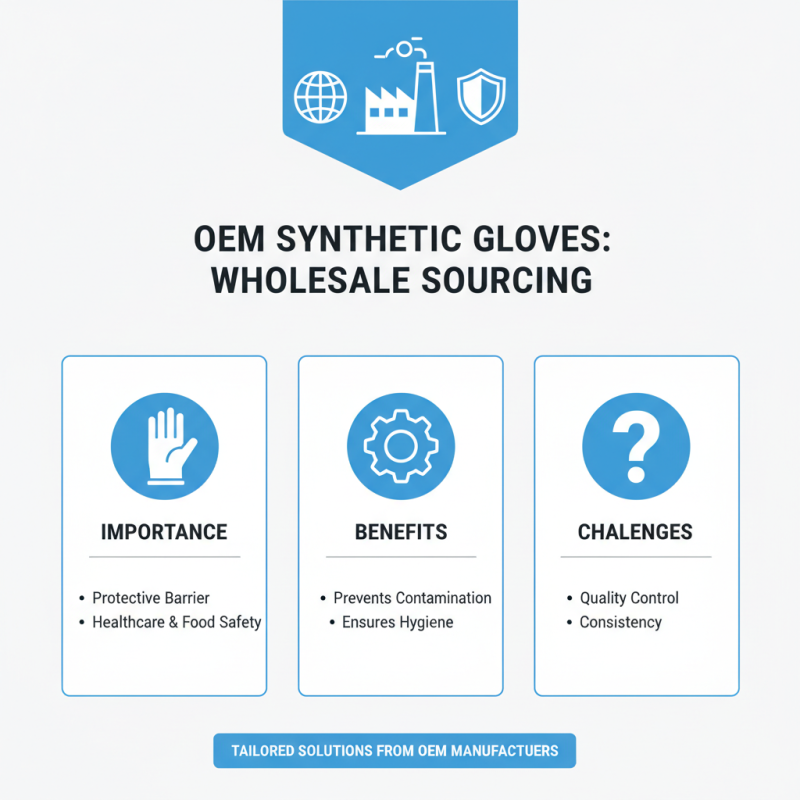
When sourcing OEM synthetic gloves, understanding their significance is crucial. These gloves are essential in various industries, particularly in healthcare and food safety. They provide a protective barrier, preventing contamination and ensuring hygiene. However, the process of sourcing them can be complex. OEM manufacturers offer tailored solutions, which can sometimes lead to challenges in quality control and consistency.
Choosing the right supplier is key. Not all manufacturers prioritize the same standards. Some may have lapses in their production processes. It's important to verify their certifications and production capabilities. Moreover, assessing the materials they use, such as Gloves Nitrile, can influence both quality and pricing. This material is known for its durability and chemical resistance, making it a preferred choice.
Surprisingly, not all suppliers have transparent communication. Some may hide issues, leading to problems later. Regularly auditing suppliers can help maintain quality. Building a relationship with manufacturers is essential. Trust can lead to better negotiation and quality assurance. Being aware of these nuances ensures that your sourcing process is efficient and reliable.
When sourcing wholesale OEM synthetic gloves, selecting reliable suppliers is crucial. According to the Global Market Insights report, the synthetic gloves market is projected to reach $12 billion by 2026. This underscores the importance of aligning with top-tier manufacturers who can meet quality standards.
Evaluate suppliers based on certifications. Look for ISO and ASTM certifications. These ratings indicate adherence to safety and quality measures. Additionally, prioritize suppliers with a transparent production process. Knowledge gained from industry experts reveals that transparency correlates with fewer defects. Aim for suppliers who provide clear product specs and testing results.
Assess communication and response time. Prompt responses often reflect a supplier's reliability. Reports indicate that suppliers who prioritize customer relationships tend to maintain higher standards. Seek out references from current clients. Engaging with other businesses can offer insights into their experiences. There's often a gap between a supplier’s claims and actual service. A thorough assessment reduces risks and establishes a solid partnership for future needs.
When sourcing synthetic gloves for wholesale, quality evaluation is crucial. Look for gloves that meet international safety standards. This ensures the product's integrity and reliability. Pay attention to materials. High-quality synthetic gloves often consist of nitrile or latex alternatives. They should provide flexibility and durability. Check the thickness, as this can impact the comfort and protection level.
Inspecting the production process is essential. Manufacturers should follow strict guidelines to maintain hygiene and safety. Cleanrooms are optimal for glove production. Also, consider the certification of testing facilities used for quality checks. It's vital to choose gloves that have undergone rigorous evaluation for strength and barrier protection.
Not all gloves labeled for medical use meet the necessary standards. Medicine Gloves should pass multiple tests to ensure they safeguard against contaminants. Look for reviews or testimonials from other buyers. This firsthand feedback can highlight potential issues you may not have considered. Be vigilant about any inconsistencies in quality. Trustworthy suppliers will provide transparency regarding their production practices.
Negotiating terms and prices with manufacturers of synthetic gloves requires careful consideration and established strategies. A recent report by the Market Research Future indicates that the global synthetic glove market is expected to reach USD 8.5 billion by 2025. This growth presents an opportunity for buyers to leverage their negotiating power. Understanding the current market trends is essential in securing favorable terms and ensuring cost efficiency.
When approaching manufacturers, it is vital to have clear specifications for your requirements. Determine your target price early on and be prepared to justify it with market data. For instance, the production cost of Pvc Hand Gloves has significantly decreased due to advancements in technology, allowing buyers to negotiate better prices. Gathering competitive quotes from multiple suppliers can create leverage in negotiations.
In some cases, buyers may overlook the importance of establishing strong relationships with manufacturers. A solid partnership can lead to more favorable terms over time. However, transparency is crucial; sharing your purchase volumes or future requirements can build trust. Reflecting on previous experiences, it's clear that ensuring a mutual understanding with manufacturers can lead to long-term benefits. This approach not only aids in price negotiations but also enhances product quality assurance over time.
When sourcing wholesale OEM synthetic gloves, understanding minimum order quantities (MOQs) and lead times is crucial. MOQs can vary significantly among manufacturers, with some requiring orders as low as 1,000 pairs, while others start at 5,000 or more. The variation largely depends on the type of glove and the production capabilities of the supplier. According to industry reports, nearly 30% of buyers faced issues due to unanticipated MOQs.
Lead times are equally important and can significantly affect supply chain management. In general, production lead times can range from 4 to 16 weeks, depending on the complexity of the order and the manufacturer's location. Delays can arise from material shortages or logistical issues. Research from the Global Supply Chain Institute indicates that 70% of businesses report unexpected delays in their supply chains, which underscores the need for proactive planning.
Buyers often overlook the impact of custom designs and specifications on lead times. Customization can increase the lead time by 2-4 weeks. Accurate forecasting and clear communication with manufacturers about timelines and expectations can mitigate these risks. Manufacturers may provide incentives for larger orders, but it’s essential to balance demand with realistic inventory management.
When considering wholesale OEM synthetic gloves, customization is key. Each brand has unique needs. Many manufacturers offer options like color, material, and size adjustments. This personalization can enhance your brand identity. Effective branding can lead to customer loyalty. Choosing the right design is essential for market appeal.
The common temptation is to opt for extensive customization without proper research. It’s crucial to understand your target audience. What colors resonate with them? Which features do they value most? Gathering feedback can guide you. Simplicity often wins. An overly complex design may confuse customers and dilute brand messaging.
Take time to review different customization options. Analyze initial samples carefully. A small mistake in design can lead to significant issues later. Ensure your brand voice is clear in the gloves’ design. Balancing creativity with practicality is vital for a successful product launch.
| Tip Number | Tip Description | Customization Options | Minimum Order Quantity | Lead Time |
|---|---|---|---|---|
| 1 | Research reputable manufacturers. | Logo placement, color schemes | 500 pairs | 4 weeks |
| 2 | Assess material quality and certifications. | Material type, thickness | 1000 pairs | 6 weeks |
| 3 | Request samples before making a bulk order. | Sizing options, grip patterns | 200 pairs | 3 weeks |
| 4 | Negotiate pricing based on volume. | Custom packaging, labeling | 300 pairs | 5 weeks |
| 5 | Check for compliance with industry standards. | Custom designs, patterns | 800 pairs | 4 weeks |
When sourcing wholesale OEM synthetic gloves, it’s crucial to ensure compliance with safety and industry regulations. The gloves must meet specific standards. Research the applicable regulations regularly. Changes happen frequently, and staying informed is vital.
Verify the certifications of your suppliers. Request documentation to assess their compliance. It’s not enough to trust their word. Reliable suppliers will provide relevant safety certifications. This aids in confirming the quality of the products. Moreover, inspect the materials used in manufacturing. The right synthetic materials can effectively prevent contamination.
Remember to consider the target market's needs. Ensure that your synthetic gloves, including options available in an Exam Gloves Box, cater to specific requirements. Tailoring your products can enhance marketability. Regular feedback from users can guide improvements. Some suppliers may cut corners, which can result in poor quality. Reflecting on these factors can help you avoid potential pitfalls in sourcing.
When selecting China suppliers for long cuff disposable nitrile gloves, it is essential to prioritize optimal forearm protection. Our extended-length gloves are specifically designed to address this need, providing exceptional coverage from the hand to the forearm. The specially crafted cuff extends to the forearm, ensuring that liquids are effectively prevented from backflowing into the sleeve during use. This feature is particularly important in environments where exposure to hazardous materials is a concern, making these gloves an ideal choice for a variety of applications, including medical, industrial, and food handling.
Sourced from reliable manufacturers in China, our nitrile gloves are produced in state-of-the-art facilities, guaranteeing their durability and safety. These gloves are not only strong and resistant to punctures, but also provide a comfortable fit that allows for dexterity while performing tasks. By choosing our extended-length gloves, you are ensuring that your team is well-protected and can work confidently, knowing that they are equipped with superior performance gloves designed to meet high standards of safety and reliability.
: They provide a protective barrier, preventing contamination and ensuring hygiene in healthcare and food safety.
Verify certifications, production capabilities, and materials used. Not all manufacturers follow the same standards.
MOQs can vary greatly, impacting order sizes. Some manufacturers may require orders as low as 1,000 pairs.
Lead times can range from 4 to 16 weeks. Delays can occur due to material shortages or logistical issues.
Custom designs can increase lead times by 2-4 weeks. Clear communication with manufacturers helps manage these risks.
Regular audits and building relationships with manufacturers can ensure consistent quality and better negotiation.
About 70% of businesses report unanticipated delays. Proactive planning is essential to mitigate potential issues.
Lack of transparency can lead to hidden issues. Open communication helps prevent problems later on.
While larger orders may have incentives, realistic inventory planning is essential to avoid overstocking or shortages.
Buyers should reflect on their decision-making and supplier relationships to avoid future sourcing challenges.
In the wholesale sourcing of OEM synthetic gloves, understanding their significance is crucial for businesses aiming to meet both market demand and quality standards. Reliable suppliers are vital, and key factors such as reputation, manufacturing capabilities, and customer service should be thoroughly evaluated. Additionally, assessing the quality standards of synthetic gloves ensures that the products meet safety and industry regulations.
Negotiating favorable terms and prices with manufacturers can lead to cost-effective sourcing strategies, while being aware of minimum order quantities and lead times is essential for efficient inventory management. Furthermore, exploring customization options for branding and design can enhance product appeal in the market. By focusing on these essential tips, businesses can effectively navigate the complexities of sourcing synthetic gloves and secure advantageous partnerships.